
As my parents aged, they stubbornly tried to maintain their autonomy while my siblings and I stubbornly tried to control their lives. It became dangerous for them to drive so we pleaded with them to give up their drivers’ licenses. Next, it became unsafe to go for walks alone. There was danger of falling or getting lost.
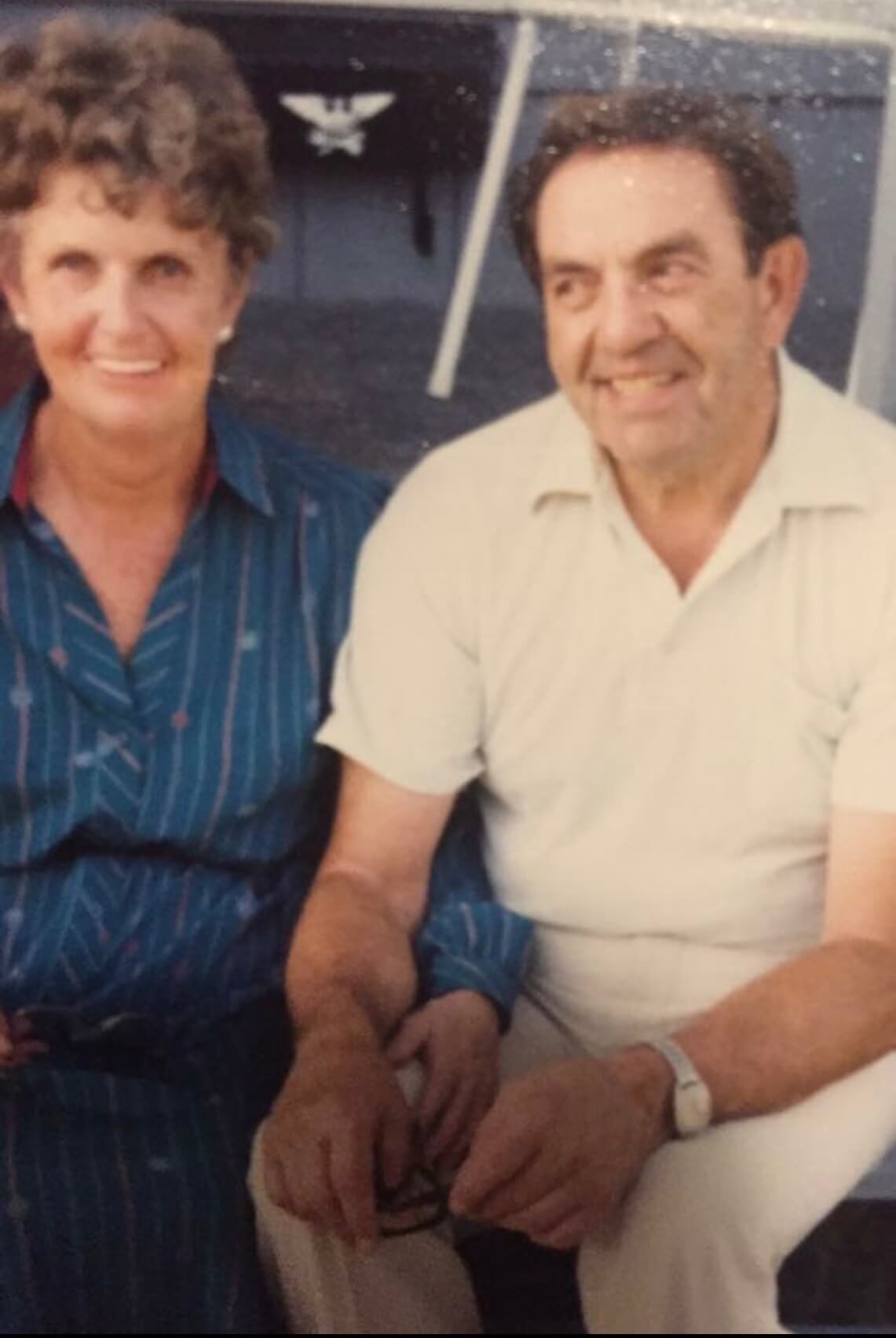
Pat’s Parents
My parents loved to play cards but when my father struggled to remember which card was trump when playing bridge, he gradually gave it up.
His fingers could no longer glide across the piano keys or pluck the ukulele strings or play the spoons, which he had a special talent for.
My mother gave up knitting and stopped her legacy of writing long and humorous letters to friends and family. She could no longer tell me what she had just eaten for lunch.
We were relentless in trying to protect them from the world and from themselves. In the process, we were stripping them of individual rights to make their own decisions.
If we chose to ignore their age-related failings and allowed them to put themselves in harm’s way, would it be prudent to possibly put others at risk as well?
A car accident or a fall or even a house fire could be perilous or even fatal to others.
After my mother passed at the age of 90 and my father was 91, my brother moved his family into our Pop’s home. The idea was to keep him safe for the next few years. He was safe, but he lost the freedom he once had to navigate his own life.
I cooked hearty meals for him and took him grocery shopping for his specialty foods. He had lost so much independence that I now cringe when recalling how I would reprimand him for making unhealthy food choices. He needed help shaving so my brother took on that task. It was, however, at my brother’s convenience, not my Pop’s.
My father was a devoted Catholic. He selflessly gave of his time and money throughout his life. In his working life, my Pop was a dentist. He donated his services to every priest and nun in the community and to anyone else who could not pay.
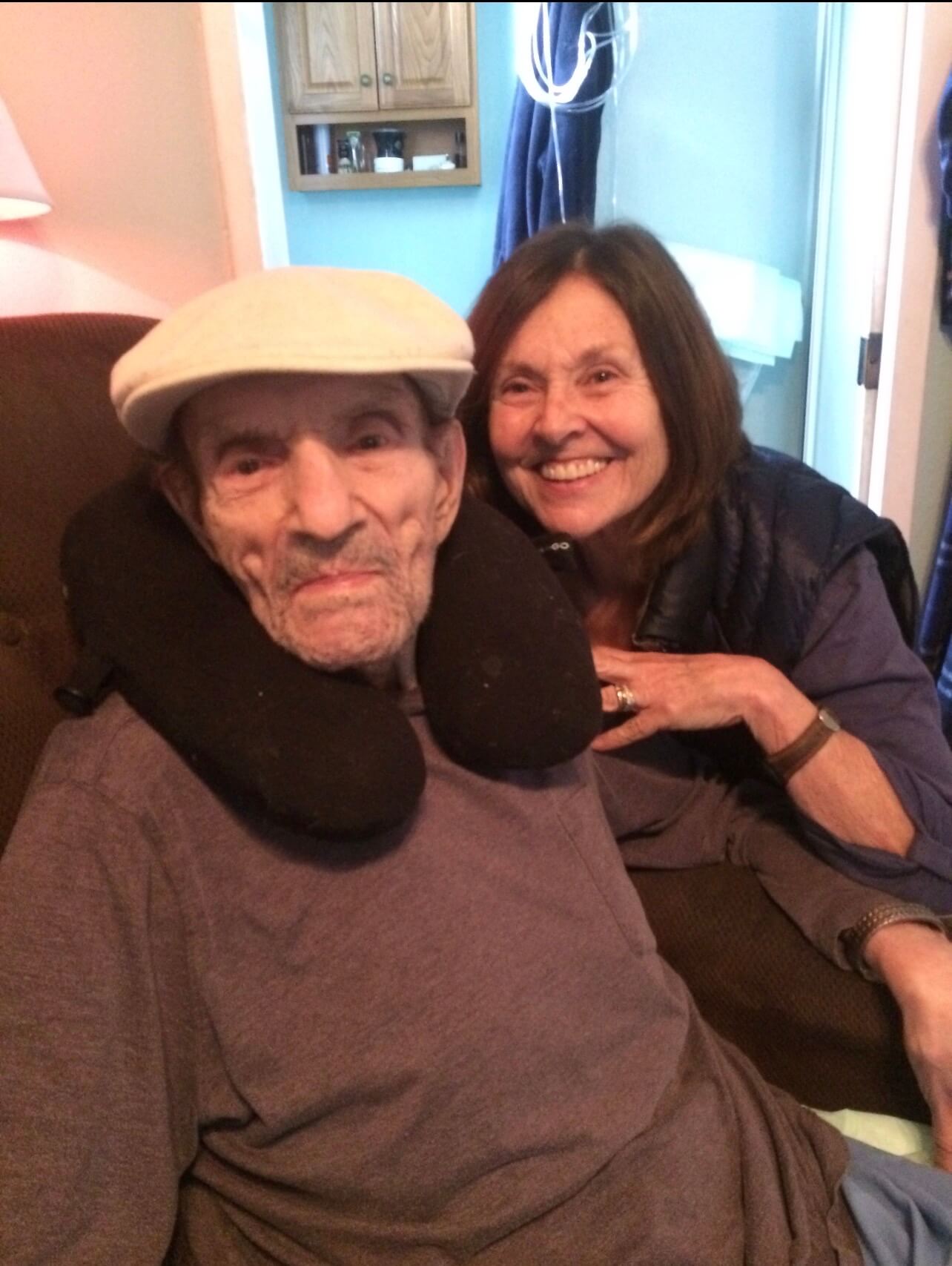
Pop and Me
When he became too frail to attend mass, the church was done with him. No one brought him communion. No one came to visit an old man who was no longer useful.
In his final years of life, he had lost most of his teeth. He chose to have decayed or broken teeth extracted rather than pay the prohibitive cost of good dental care.
He died at home, alone, at the age of 97.
My brother and sister-in-law were at work. Their kids were in school. I was not in town. Where is the justice in that? How could we have handled his declining years differently?
There are no easy answers.
At 79, I now find myself in a somewhat diminished state. I am now the elder in my family. My back is stiff. My shoulder aches. Every joint in my body has some arthritis. Where is the playbook for my aging years? Where is the playbook for my children as I age? Will I be able to age and die in my own home as I have planned? Will my daughters try to control me in my dotage to keep me safe? I don’t want that, just like my Pop didn’t. I try to have candid conversations with my daughters about my final days in this life. I didn’t know how to care for my father and I have some regrets. Will it be any easier for my children to care for me?
I grew up in upstate New York, then moved to New York City and eventually to Los Angeles where my husband and I raised our daughters. After retiring, we settled in the Pacific Northwest where our daughters and their families had relocated. I spent 17 years as a flight attendant for Pan Am and have enjoyed traveling extensively throughout the world. At age 79, I am taking life a bit slower, but remain active in hiking, deep water aerobics and competitive dragon boat racing. Spending time with my five grandchildren gives me the greatest joy.
Patricia, wonderful story and so timely as our parents and we age. A wonderful book I read, and need to reread as I deal with my 99 year old mother’s aging, “Being Mortal” by Atul Gawande gives some great insight into balancing safety and independence. I have a copy to loan if you would like to read it.
Patricia! Thank you for this essay. May I suggest a playbook for you, in three titles:
1. Dynamic Aging by Katy Bowman (that’s me) — for the aches and pains and setting up your life for better mobility and physicality overall.
2. Being Mortal by Atul Gawande — a gorgeous, practical read on what makes “your best day” and the need for you and your family to understand palliative care now, and how this all leads to a longer, richer life even within the context of disease.
3. Joyspan by Kerri Burnight — there’s lifespan, health span, and joyspan! Older adults are not children, despite needing extra support. How to build a day and a life around the things that make you feel vital, even in the shifting context of age.
Read these and ask your daughters to read them, and then discuss them. A wise and loving book club!
Thank you, Katie. I have already read and enjoyed DYNAMIC AGING. BEING MORTAL is on my shelf waiting to be read. What a small world we live in! Hope to see you at the soccer tournament in Olympia.
An important story. It reminds us how difficult the choices we make are. A heartful loving, searching tale about issues all of us are likely face one way or another.
When my parents started having difficulty due to health issues they hid most of their problems from me and my sister. Their only plan for aging was to move their bedroom down to the first floor, but my mother was literally crawling up the stairs and didn’t think it was time to move down yet. At the time, I thought something that made it difficult was that they really didn’t have a plan for the ‘what ifs’ and that I would learn from that. Well, 20 years later, I don’t have a plan either. I do have my will, advance directive, and POAs in place. At 72, I’m in good shape – physically fit, and healthy. but as we know, life can turn on a dime. That doesn’t motivate me to do much more than to cross my fingers and hope to die in my sleep.
Such an important story!
At 84, my only request is once I can no longer care for myself for whatever reason, that someone grant me a compassionate end, as we do our pets, when they can no longer
walk, are near deaf and blind and hurting everywhere.
Your frustration is repeated by every child who does their best to protect their parents. It’s sort of like every parent has tried their best to protect their child…yet things still happen. Even if we have a plan or direct our children to care for us in a certain way…they may not. It’s such a difficult topic! Our doctor told me to take my husband’s keys from him. I said, “YOU TAKE HIS KEYS FROM HIM! You don’t have to live with him!!!”
I tried my best to always be in the driver’s seat but he still had his keys. It was, in the end, the keys that led to his decline and death. He fell from his truck trying to get in it. He broke his hip and it was not long thereafter that he passed. Would it have been different if I had taken his keys? I can never know.
We never know which fall is THE fall that will accelerate our demise. When it was obvious that my mother should not be driving anymore — too many reports from relatives and neighbors who saw her on the road — someone from the local office of the aging told us to park the car where she could see it and then hire a bunch of drivers to take her anywhere and whenever. Giving up the license or the car feels like the last step in freedom and independence. It’s still hard for me to imagine — and yet probably in my future.